


Pepper Lunch Territories Are Moving Fast - Here’s What That Means for Serious Franchise Operators
Pepper Lunch territories are going fast - see why operators are racing to open DIY teppanyaki.
Pepper Lunch Territories Are Moving Fast - Here’s What That Means for Serious Franchise Operators
Pepper Lunch territories are going fast - see why operators are racing to open DIY teppanyaki.
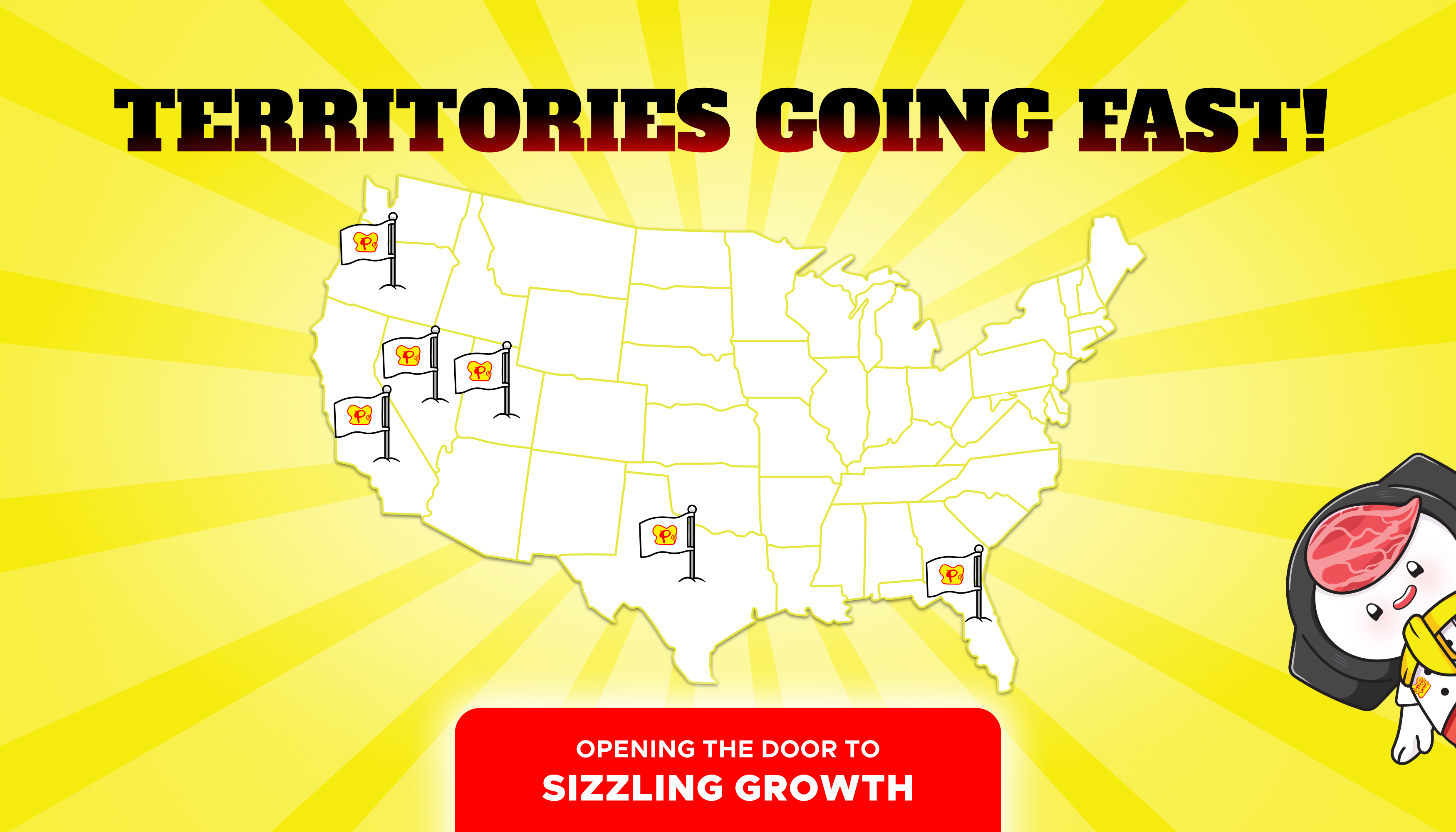

The most valuable franchise opportunities rarely stay open for long.
When a concept has momentum - strong unit economics, a clear operating model, and growing demand from multi-unit operators - the map changes quickly. The “best” territories go first. Then the next-best. And before most buyers realize it, the remaining availability looks nothing like it did a quarter ago.
That is the current reality for Pepper Lunch North America.
If you are evaluating Pepper Lunch as a franchise opportunity, this is the moment to understand how territory availability actually works, why it accelerates fast, and how to position yourself to secure a market before it is gone.
Why Territory Availability Tightens So Quickly
Territories do not disappear because of hype. They disappear because the underlying math makes sense for experienced operators.
When franchise development reaches a certain velocity, availability tightens for three reasons:
1) The “obvious markets” get claimed first
Every franchise has a short list of high-priority metros that operators and developers gravitate toward immediately. Think dense trade areas, strong household incomes, favorable retail corridors, and regions with high fast-casual demand.
Those markets are the first to get reserved - and once they are under development, they are no longer available to new inquiries.
2) Multi-unit deals absorb large blocks of the map
Single-unit buyers pick a point. Multi-unit buyers pick a region.
When seasoned operators sign development agreements, they often secure multiple territories at once. One deal can remove an entire cluster of markets from the board - sometimes across a whole state or multi-state region.
If you are watching the opportunity from the sidelines, the map can shrink dramatically between the time you first inquire and the time you are ready to move.
3) As the pipeline grows, the brand becomes more selective
Momentum changes the dynamic.
As development demand increases, the brand can prioritize the best-fit partners and the strongest development plans. That is good for the system - but it also means the bar rises and the window narrows.
Waiting rarely improves your position.
The Territory Reality Most Prospects Miss
Most prospective franchisees assume there is a long runway.
They assume they can “circle back,” take their time, and revisit in 60-90 days.
But territory allocation does not work like a consumer purchase. It is closer to real estate:
- You do not get to buy yesterday’s inventory.
- You do not get last quarter’s map.
- You do not get a reset when you are ready.
If a territory is reserved or awarded, it is gone. And when a competitor locks up a market you wanted, the alternative is often a secondary trade area - or a completely different region.
What “Going Fast” Actually Looks Like
When territories are moving, you will typically see:
- Increased competition for top metros (multiple qualified groups pursuing the same trade areas)
- Faster timelines from first call to signed development agreements
- More multi-unit commitments that pull availability forward
- A shifting priority list where “next markets” become “now markets”
This is how strong franchise systems expand - and why timing matters.
How Smart Operators Secure a Market (Without Rushing Blindly)
The best operators do not panic. They move decisively with structure.
Here is the approach that tends to win:
1) Pick 1-3 target markets - and one backup
Be specific early. The more precise your market selection, the faster you can validate availability and move forward.
2) Enter the qualification process prepared
Brands move faster with groups that show clarity on:
- Development timeline
- Real estate approach
- Operating capacity
- Financial readiness
Speed comes from preparedness, not pressure.
3) Treat territory as a strategic asset
Territory is not just the first store. It is your long-term expansion position.
If you believe in the concept, securing the right market early can compound into:
- better site selection options
- stronger unit clustering
- improved recruiting leverage
- future multi-unit growth paths
The Cost of Waiting Is Usually Invisible - Until It Isn’t
You do not feel the cost of waiting on day one.
You feel it when:
- the metro you wanted gets awarded
- your ideal trade area is reserved
- the development footprint shifts around you
- you are forced into a less strategic market
In a fast-moving system, the biggest regret is not moving too early. It is moving too late.
If Pepper Lunch Is On Your Short List, Now Is the Time to Verify Availability
If you are a serious franchise operator evaluating Pepper Lunch, the smartest next step is simple:
Confirm territory availability in your target market and understand the current development landscape.
Once you have that clarity, you can make a confident decision from a position of strength.
Ready to explore available markets?
Start the franchise inquiry process and request the latest territory availability map.


Subscribe to our Newsletter
News & Press
Ready To Open Your Own Pepper Lunch Location?
Click below to learn more about our North American Franchising Opportunities.
